
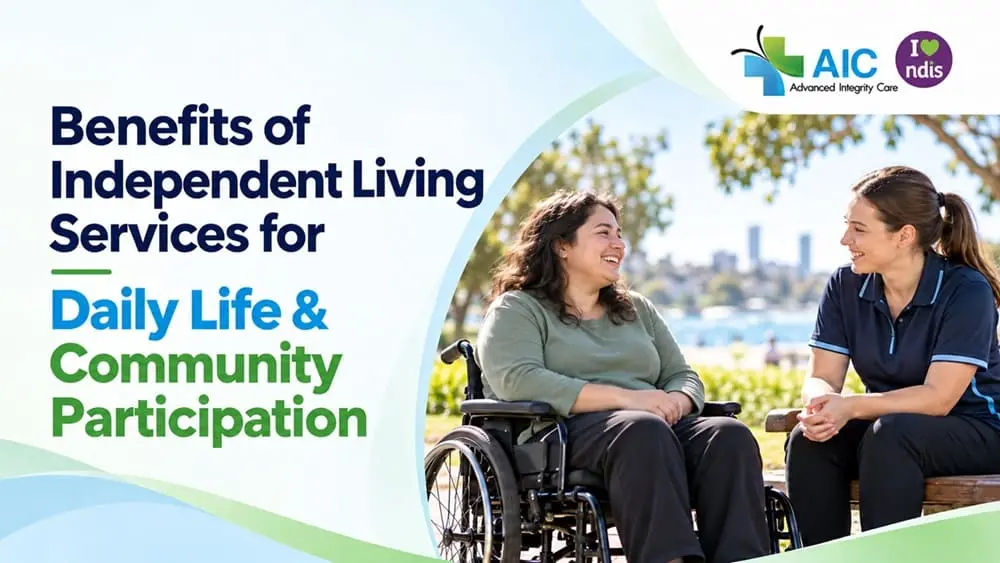
Being independent doesn’t mean doing everything by yourself. For lots of people with disability, independence is not about doing everything alone and having no help — it’s about how to get the right support at the right time, whilst still choosing daily life for themselves.
Independent living services may help individuals with personal care, household tasks and routines, meal preparation, planning a day, pursuing skill development and accessing the community. The great thing about these services is that they can help participants gain confidence and take a more powerful role in the way they live.
The right NDIS daily living support can help the people over New South Wales in which they do ordinary things every day much easier, safer and more meaningful. And support can also bring social connectedness, active citizenship and the acquisition of practical life skills.
Independent living services: Supports that assist a person in carrying out basic daily tasks with the goal of staying as independent and self-directing as their particular skills and abilities allow.
Depending on individual needs and an NDIS plan, support may involve:
However, every person has different goals. Therefore, independent living support in NSW should be personalised rather than delivered as a one-size-fits-all service.
One of the best benefits of daily living assistance is that it simplifies everyday tasks.
Some people, just even to have breakfast, sort clothes out or go shopping may need more assistance. Someone who is a support worker can help out with this, however also promoting they participant to do what they possibly can.
So for example, instead of a support worker preparing all the meals of a participant, the worker might help that participant pick what to include in a dish and understand basic instructions on how to prepare food or safely use kitchen appliances.
Those small steps will gradually lead to useful day-to-day skills. Looking for a Respite Care Service in NSW?
| Daily Activity | Possible Support | Independence Goal |
| Personal care | Assistance with dressing or grooming | Build a consistent self-care routine |
| Meal preparation | Planning and cooking meals | Improve kitchen confidence |
| Household tasks | Cleaning, laundry and organising | Develop home management skills |
| Shopping | Planning purchases and visiting shops | Improve decision-making |
| Appointments | Travel and appointment support | Build confidence outside the home |
| Daily routines | Creating schedules and reminders | Improve organisation |
The exact level of assistance should depend on the person’s abilities, preferences and goals.
Good disability support should not simply complete every task for someone.
Instead, daily living assistance can provide opportunities to practise useful skills.
For instance, participants may learn how to:
These skills may appear small individually. However, together they can make a noticeable difference to confidence and independence.
The NDIS describes supports as helping participants complete daily living activities and build independence and skills.
Choice is something that independence has a strong relationship with.
Everyone should have a say in the decisions made about how their day to day lives, what they do and why, and who helps them. So honest Person-centred support should relate primarily on what the participant would like to achieve rather than just being run by a fixed timetable.
Someone may ask for support in learning how to cook by themselves. Someone else might want to get more comfortable attending community events. At the other end of this spectrum, we have people who might just work on home routines.
And the goals can be hugely different — perfectly simple.
Support which is attuned to preferences will reassure people able to express choice and take on aspects of their day-to-day living. Looking for a Community Access Services in NSW?
Living independently is not only about what happens inside the home.
Being involved in the local community can also contribute to wellbeing, confidence and social connection.
Community participation support may help people access activities that match their interests and personal goals.
This could include:
Under relevant NDIS core supports, assistance with social and community participation may fund support workers who help eligible participants become more independent in community activities and personal interests.
Some may struggle to attend social or community events regularly without the right assistance.
Sometimes transport issues, a language barrier or lack of familiarity with their surroundings might make participation more limited.
This might involve assistance from a support worker who can provide reassurance and help with things like making appointments etc.
A participant may initially attend a community group with a worker beside them. Later, as their confidence builds, they may require less one to one support.
A slow approach helps create independence without overwhelming the person.
Then social activities and functions may help people to meet friends, explore their desires and connection with their places.
Confidence usually grows through experience.
Networking and reading about catching a bus is completely separate from taking one. Similarly, shopping is not just knowing what products to choose which register at the checkout and taking home.
As a result, independent living services may be opportunities where skills can be practised in real-life situations.
For example, when you go out shopping a user may start with close support. On the alternative, after a couple of even more brows through they could be confident regarding gathering things alone. Eventually they may only require guidance every now and then.
That fund is gratifying because the user can see their own growth. Get details on Nursing Services in NSW.
One more great advantage of independent living assistance is better safety.
Some also assist participants in developing skills around cooking, medications support if appropriate, household organization and personal hygiene.
NDIS information suggests the provision of assistance for people receiving Supported Independent Living (SIL) may include personal hygiene, cooking, cleaning and routine social skills or advice on keeping safe and using public transport, as well as help with attending appointments where these supports are funded.
But SIL is just one type of support for living and home. Other arrangements may be more appropriate for those who need different degrees or types of care.
For example, community engagement is much more authentic when it is aligned with what the person actually enjoys.
An art lover might appreciate a local art course. Another may prefer sport, gardening or music or community events.
Consequently, the support given must emphasize true involvement instead of merely keeping someone occupied.
Frequent participation in things-to-value results in interactions with others who value similar things and forge stronger community bonds.
Further, taking part in the same meeting multiple times can create familiarity with a new environment.
Independent living services can also play a supportive role to families and other informal carers.
One of the largest day-to-day supports often comes from families. But merely depending on family help will not always encourage a participant to develop some greater self-sufficiency.
Professional support can offer opportunities for participants to rehearse skills with somebody external from their family system
And families can feel comforted in the knowledge that their family members will have a structured support system based around personal goals and day to day advancement.
Related Services:
» Disability Services in Newcastle
The most effective NDIS independent living services connect daily activities with meaningful goals.
For example:
| Participant Goal | Possible Support Approach |
| Learn to cook | Practise simple recipes each week |
| Become more social | Attend a local activity or group |
| Improve household skills | Learn cleaning and laundry routines |
| Become confident shopping | Plan lists and complete supported shopping trips |
| Improve community access | Practise travelling to familiar locations |
Rather than concentrating only on what a participant cannot do, goal-focused support looks at what they want to learn and where their existing abilities can grow.
Skill development rarely happens overnight.
So regular help can matter.
Routines can be easier to follow when participants work with support workers who understand their communication style, preferences and goals. Furthermore, employees are able to see the progress and change support as abilities develop.
As an example, someone who used to need cues for each step in making lunch might eventually just need a reminder.
Related Articles:
» Independent living disability support for better quality life
» Independent Living: Guide for Participants & Families
» Choose the Right Independent Living Support in NSW
» How Community Access Services Support Independence Every Day?
» Independent Living Support in NSW
When considering an independent living service provider in NSW, participants and families should look beyond availability alone.
It is worth considering whether the provider:
Most importantly, support should work with the participant rather than taking control away from them.
Not, no getting a referral to someone who can help you or your issue with living independently.
Good assisting services support people to attain the skills required for being on their own, establishing routines and agency & confidence in community.
Furthermore, out in the community services can pose as conduits for socialisation and life-enhancing opportunities that so many people want to engage in.
In the end, independence is something else for everybody. Some individuals may require much assistance every day while others just need support for certain tasks. Whatever suits them best, person-centred, respectful support can enable them to live a more choiceful, confident and participative life.
Advanced Integrity Care acknowledges the Awabakal and Worimi Peoples as the Traditional Custodians of the land on which we work. We pay our respects to Elders past and present and extend that respect to all Aboriginal and Torres Strait Islander peoples.
admin@advancedintegritycare.com.au
Call: (02) 49511530
2/5 Withers St, West Wallsend NSW 2286, Australia
