
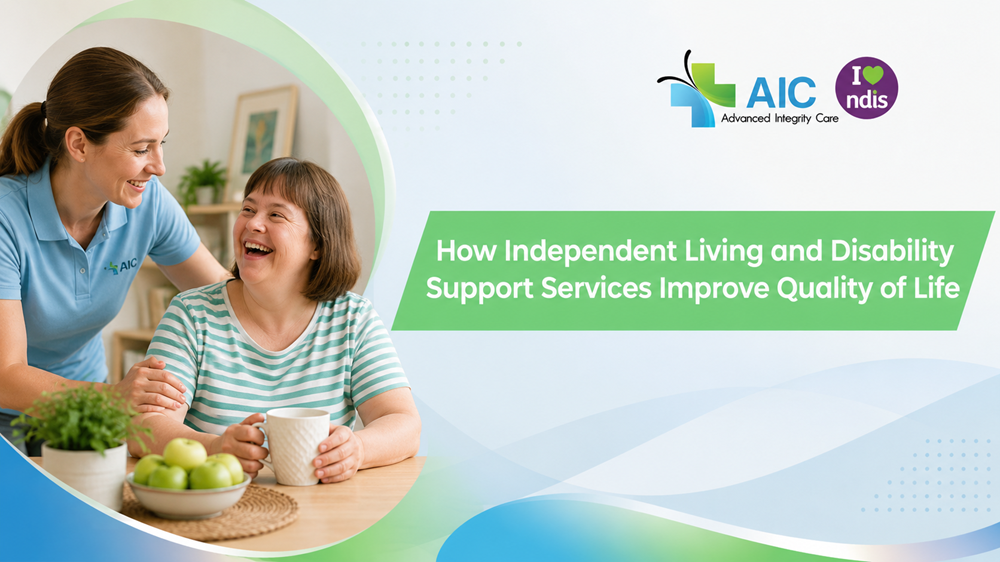
Being independent does not mean you must do everything by yourself. Actually, independence is the goal for a lot of people with disabilities which are available when they need it but are not having their hands held in knowing how to live day-to-day. Independent support living and disability support services enable people to be independent—achieving a better life, as well as independence, choice, community involvement, and management of their day-to-day lives.
We are pleased to do so; a much-needed disability support service will surely make the lives of people and families here in NSW feel more manageable. It could be anything from meal preparation, accessing appointments, learning independent living skills, community access or one to one social development. Most importantly, good support keeps the choices, wishes and abilities of the individual as central to the service.
With person-centred support from Advanced Integrity Care – NSW, participants can start to lead a more independent, involved and empowered life.
Independent living support refers to assistance that helps a person manage everyday activities while maintaining as much control and independence as possible.
Every person’s needs are different. Therefore, support should never feel like a standard package provided in exactly the same way to everyone.
Depending on individual circumstances, disability support services in NSW may include:
The purpose is not simply to complete tasks for someone. Instead, quality support encourages people to participate, learn and make decisions whenever they are comfortable doing so. Get details Transformative Power of Disability Services.
Quality of life involves much more than physical wellbeing. It can include independence, friendships, safety, confidence, personal choice, meaningful activities and feeling connected to the wider community.
Therefore, the right disability care and support services can influence several areas of everyday life at once.
| Area of Life | How Suitable Support May Help |
| Daily routines | Makes household and personal activities easier to manage |
| Independence | Builds practical skills and confidence |
| Community participation | Supports access to activities, events and local services |
| Social connection | Creates opportunities to meet and interact with others |
| Personal choice | Encourages participants to make everyday decisions |
| Skill development | Helps people practise cooking, shopping and other daily tasks |
| Safety | Provides appropriate assistance during daily activities |
| Goal achievement | Supports progress towards individual goals |
The level and type of assistance will naturally vary from one participant to another.
The major benefits of independent living disability support is the ability to learn essential day-to-day skills.
For example, this might mean rather than cooking every meal for a participant, a support worker will team with the participant to select a recipe, go shopping together and cook with the participant. Then, through natural fading, the participant may become comfortable doing more steps on their own.
Support can be understanding issues with laundry, arranging a bedroom, drawing up a budget for grocery shopping or preparing a weekly schedule.
These tasks can appear small. Nevertheless, mastering them can really feel a bit of like winning the lottery.
Independence also means different things to all of us. So for example your partner may have a preference that they will need to cook for themselves when necessary while you may wish to pursue personal goals such as being able to use public transport independently or participate in community activities.
Having a say in the decisions that affect the people is a key factor of improving the quality of life.
Thus, person-centred disability support needs to involve the participant themselves in their planning for day-to-day activities and aims.
Choice might include deciding:
Support workers can provide guidance when needed. Nevertheless, wherever possible, the participant should remain involved in decisions about their own life.
This approach supports dignity while also encouraging self-confidence.
A meaningful life is more than just the family.
Some people with disabilities may find it hard to take part in everyday community activities. At times, the inability to travel or unfamiliar surroundings, or even insecurity may restrict participation.
Community participation support allows individuals to gain more involvement in the activities that they are interested in.
For example, one may provide assistance to go to a library, join a recreational group, shop, take part in recreational and learning type activities or become involved with their community.
It is important for you to socialize on a regular basis as it concerns your overall wellbeing.
Sadly though if there are factors such as disability, transport difficulties or change in personal circumstances these can all sometimes impede on social opportunities.
This is where social and community participation support can come into it.
Support workers may support a participant in community activities, recreational programs or take them to appointments. Furthermore, they can prompt the performer to take acceptance on activities that are personalised to them.
Finally, more substantial engagement should not just mean busy work for the person. The activities have some value to that person.
One of the participants could join a gardening group. For a different it could be going to a coffee shop, going to art activity or local sporting event. Looking for a Disability Services in NSW?
Life skills can increase independence both inside and outside the home.
Therefore, daily living support services often focus on developing practical abilities instead of completing every activity on behalf of the participant.
Skills may include:
Naturally, progress may happen gradually. Yet even small improvements can make everyday life easier.
Furthermore, learning a new skill can increase confidence and encourage someone to try other activities.
A lot of people find routine helpful. It tends to make things predictable and assist a person with their day plan.
The Daily Disability Support Participants may benefit from the reliability of daily disability support to help keep them at a regular routine with meals, household responsibilities, appointments and community activities.
For instance, if a participant is consistently supported with the weekly grocery shops it may make it easier for that participant to plan what meals they eat. Likewise, it also helps with appointment schedule organisation which means less confusion around schedules.
Conversely, an effective routine needs to be flexible enough to incorporate the preferences of the participant.
Well because support should wrap around a person not the other way round – forcing their life to accommodate really convoluted service. Get details on Wound Care Service in NSW.
Even family members and informal carers can benefit from disability help.
The contributions made by families on an everyday basis are frequently outsize. But juggling caring responsibilities with work, family commitments and personal needs can prove challenging.
The professional disability assistance services can perform some common tasks while supporting the participant in achieving their individual targets.
This allows family members more opportunity to be engaged with their loved one rather than being tied up in managing each of the tasks related to support.
However, communication remains important. As appropriate, and if the participant wants them to, participants work with families and support teams.
Personal goals differ considerably.
One person may want to become more confident cooking meals. Another may want to participate in more social activities. Meanwhile, someone else may focus on developing routines that support greater independence at home.
Effective disability support in NSW connects everyday assistance with these individual goals.
Rather than asking only, “What support does this person need today?”, a person-centred approach also considers, “What does this person want to achieve?”
That small change in thinking can make support far more meaningful.
Related Services:
» Community Access Service in NSW
» Independent Living Service in NSW
» Respite Care Services in NSW
» Disability Services in Newcastle
Finding suitable support involves more than checking what services a provider offers.
Participants and families should also consider how the provider communicates and whether support can adapt as circumstances change.
When considering a disability support provider in NSW, it may help to ask:
A positive relationship between the participant and their support team can make everyday support feel more natural and productive.
Related Articles:
» Looking for Reliable Disability Support in NSW?
» Disability Support Services in Australia: Types, Benefits & Eligibility
» Role of Community Participation in Improving Disability Wellbeing
» How Disability Support Can Help You Reach Personal Goals
» Choosing Personalised Disability Care in NSW Without the Stress
It is not a measure of how many things a person can do in their own right that makes them independent.
This is less about options and more about choices, spending time productively learning skills and engaging with day to day life (with appropriately customised support where appropriate).
Independent living and disability support services are more focused on the important elements that matter to people in pursuit of practical objectives, offering greater control over their time and decisions impacting their lives.
At Advanced Integrity Care – NSW the emphasis is on respectful, individualised care planning in accordance with personal situation, needs and goals for people across New South Wales. Many people living with a disability need assistance with basic day-to-day activities, getting out into the community or learning daily living skills but receiving appropriate support can help them to have a more connected and purposeful life.
Advanced Integrity Care acknowledges the Awabakal and Worimi Peoples as the Traditional Custodians of the land on which we work. We pay our respects to Elders past and present and extend that respect to all Aboriginal and Torres Strait Islander peoples.
admin@advancedintegritycare.com.au
Call: (02) 49511530
2/5 Withers St, West Wallsend NSW 2286, Australia
