
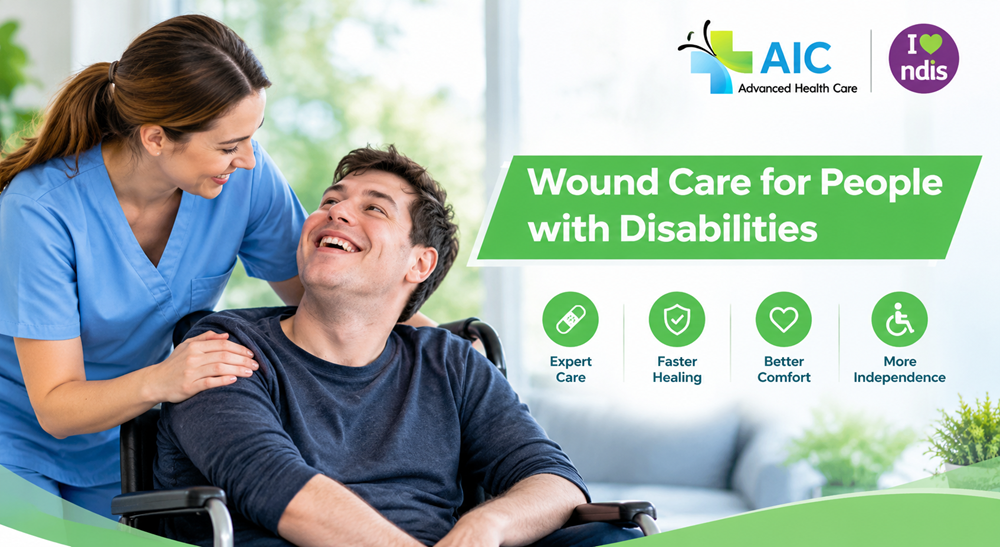
A single small wound, or other skin lesion, can present a challenge to treat effectively without the help of professional support.Fortunately, there is professional wound care available to individuals who have a disability that helps prevent potential complications, encourages healing and ultimately makes each day simpler.
Individual and family members across New South Wales can benefit from being educated on wound prevention, the options available for treating wounds, and the locations where they can receive nursing care for their wounds.
The Advanced Integrity Care – NSW provides individualised disability support to assist individuals with their own personal care needs, independence, and dignity. The purpose of this guide is to inform people about the different types of wounds, how to prevent these types of wounds, professional treatment options available for each type of wound, and what supports are available through the NDIS for people who require support for their wounds.
Disability Wound Care includes the assessment of the wound, the treatment of the wound, protection of the wound, and tracking of the wound based on the person’s physical abilities, medical condition(s), and level of daily support.
People with limited ability to examine parts of their bodies require help. In addition, those who have decreased sensation, limitations on their ability to move, or other physical problems affecting the health of their skin can also benefit from assistance.
Thus, there is more to providing good wound care than simply putting on a bandage. Providing proper wound care will also involve routine skin checks, relieving pressure on the wound site, avoiding infections from developing, providing nutritional help for the patient, and coordinating efforts among all of the patient’s health care providers.
An individual wound care plan will allow for the most appropriate treatment to fit the patient’s individual situation.
Some people who have disabilities do not experience an increase in their risk of developing wounds. On the other hand, some types of physical and/or health limitations may contribute to increased risk of developing pressure ulcers.
Common contributing factors include:
Assistive Equipment: Poor fitting braces, prosthetic limbs, and/or mobility aids can result in friction.
Different wounds require different treatment approaches. Understanding their causes helps individuals and carers recognise problems before they become serious.
| Wound type | Common cause | Recommended care approach |
| Pressure injuries | Prolonged pressure or shear | Pressure redistribution, skin assessment and clinical treatment |
| Skin tears | Friction, knocks or fragile skin | Gentle handling and appropriate protective dressings |
| Diabetic foot ulcers | Diabetes-related nerve or circulation problems | Podiatry, medical review and specialist wound care |
| Surgical wounds | Operations or medical procedures | Follow surgical instructions and monitor healing |
| Moisture-associated skin damage | Prolonged exposure to urine, faeces or perspiration | Gentle cleansing, moisture management and skin protection |
| Chronic leg ulcers | Venous or arterial circulation problems | Clinical assessment and cause-specific treatment |
For example, a wheelchair user may develop pressure damage around the sitting bones if their seating system does not distribute pressure appropriately.
A professional health care provider must determine what kind of wound is present, where it is located on the body, how large and deep the wound is, and the condition of the skin that surrounds the wound.
The next step will be to evaluate how well blood is moving through the body, if there is a level of pain present, the possibility of developing an infection, the capacity of the patient to perform daily tasks, and whether or not there are any other underlying health issues.
The results will assist in developing a treatment strategy and provide guidance on setting achievable targets for recovery.
In addition to eliminating waste, proper cleaning will allow for a safe environment for treating a wound. The choice of cleaning solution and the choice of wound dressing are dependent on the characteristics of each individual wound.
The appropriate dressing choice for a physician will depend upon how much fluid is present within the wound site, how deep the wound is, and the condition of the surrounding skin.
Additionally, carers must avoid self-medicating (prescribing) with non-prescription antiseptic products, cream, or other home-made treatment for challenging wounds.
Pressure injury prevention remains extremely relevant to individuals that are required to sit in a wheel chair or lie down in bed for extended lengths of time.
An Occupational Therapist or another qualified health care provider may provide recommendations regarding the selection and utilization of pressure relieving devices (i.e. cushions/mattresses), proper positioning techniques and/or modifications to existing equipment.
The frequency of repositioning should depend upon the individual needs of the patient, the ability of the patient’s skin to withstand repositioning, and a professional assessment of the patient’s health status rather than following a standard procedure.
Regular monitoring helps identify complications early.
The health care professional can document changes in wound size, drainage, appearance of tissue, pain levels and the condition of the surrounding skin.
The healthcare team can adjust the way you are treated for your wounds if they are taking longer to recover from than anticipated or if they are becoming worse.
Adequate nutrition contributes to healthy skin and tissue repair.
Along with the ability to heal correctly, having an adequate amount of protein in your body, receiving enough calories from food (energy), and staying hydrated with the right amount of fluids are all very important for healing. A registered dietitian can help you if you are unable to swallow easily, are eating under a specific restriction, or are malnourished and therefore have restricted access to nutrients.
Practical prevention measures for individuals, families and support workers
Use suitable pressure-relieving equipment
A professional healthcare provider can make recommendations for cushioning products (such as pillows), mattress selections, and how you should sit, depending upon your risk level.
Inspect vulnerable skin areas
Examine the heels, hips, elbows, tailbone and under medical/mobility devices.
Keep your skin clean, moisturize it as needed, take care of any incontinence issues that cause excessive moisture on your skin, and tell someone immediately if you have had redness, blackening of your skin, blistering, or open wounds for a long time. Do not rub areas of the skin where there is evidence of pressure injury.
The Australian clinical practice guidelines advocate for customized plans for preventing pressure injuries, frequent assessments of patient’s skin, and appropriate support surfaces.
Some wounds need urgent medical attention rather than routine dressing changes.
| Warning sign | Recommended action |
| Increasing redness, warmth, swelling or pain | Arrange prompt clinical assessment |
| Pus, unpleasant odour or increasing discharge | Contact a healthcare professional promptly |
| Wound becoming larger or deeper | Request wound reassessment |
| Fever or feeling increasingly unwell | Seek urgent medical assessment |
| Severe bleeding that does not stop with pressure | Seek emergency medical assistance |
| Rapid deterioration, confusion or signs of serious infection | Call 000 for emergency help |
Furthermore, wounds that repeatedly reopen or fail to heal require assessment for underlying causes.
Healthdirect recommends medical review for signs of infection and wounds that take longer than four weeks to heal.
In New South Wales, there are community nursing services that will provide clinical care for you in your home or in other community locations.
Nursing assistance can include a variety of services, including but not limited to, the evaluation of wounds, application of prescribed dressings, monitoring, education and coordination with other members of the healthcare team.
An example of this would be when a registered nurse works with an occupational therapist so that they can deal with wound treatment and mobility issues related to pressure.
In addition, family members and support staff may be given advice on how to identify changes which need to be reviewed by a professional.
In addition to promoting safer healthcare, this collaborative method allows individuals to remain independent.
Related Services:
» Disability Services in Newcastle
» Transformative Power of Disability Services
» Disability Services in Morisset
» Disability Services in Chisholm
The NDIS could potentially pay for eligible pressure care and wound management supports if these are related to the participant’s disability support requirements.
The majority of the healthcare system still provides for the immediate needs of patients with critical illness, and also provides a wide range of other primary health care services.
The National Disability Insurance Agency (NDIA) usually needs to see some form of clinical evidence before it will fund an individual with a specific type of wound care support. Examples include; a wound assessment or a pressure care plan.
As a result, patients need to speak with their physician and NDIS representative prior to organizing funded services.
Wound care needs to be able to do more than simply treat the physical harm resulting from the injury. It should also consider the person’s way of learning about things, communication preferences, and the need to stay comfortable and have some degree of privacy during the treatment. Lastly, it should enable them to continue performing their regular daily tasks.
At Advanced Integrity Care – New South Wales, we know how important it is to tailor disability support services for each client according to what they need, as well as work collaboratively with our clients, their families, and any of the other relevant health/medical professionals.
Each person’s circumstances will determine how much assistance is required. For example, some people may require help with their everyday skincare, others may need to create a plan to maintain their physical movement capabilities and still others may need assistance in organizing community-based nursing services.
The proper use of well educated and trained personnel is critical for managing a complex wound.
Related Articles:
» How to access NDIS funding for wound care?
» Overcoming Wound Care challenges with NDIS support
» Professional Wound Care Services Help Prevent Infections
» Why Professional Wound Care Is Important?
» Professional Wound Care Services in NSW
Wound prevention, early identification of wounds, and prompt medical care for wounds can all enhance your wound management practices.
Individualized support for people who have disabilities may help prevent unnecessary skin injury, facilitate the healing process, and allow individuals to perform routine activities more easily.
The individual/support network will have the opportunity to make educated choices about how to maintain healthy skin, along with quality of life through the use of proper assessment, pressure management, and coordinating care between the individual and the support network.
Need guidance about disability support and wound care arrangements in NSW?
Contact Advanced Integrity Care – NSW to talk about your unique support requirements, what services we have available, and how we can coordinate the care that will best meet those requirements.
Advanced Integrity Care acknowledges the Awabakal and Worimi Peoples as the Traditional Custodians of the land on which we work. We pay our respects to Elders past and present and extend that respect to all Aboriginal and Torres Strait Islander peoples.
admin@advancedintegritycare.com.au
Call: (02) 49511530
2/5 Withers St, West Wallsend NSW 2286, Australia
