
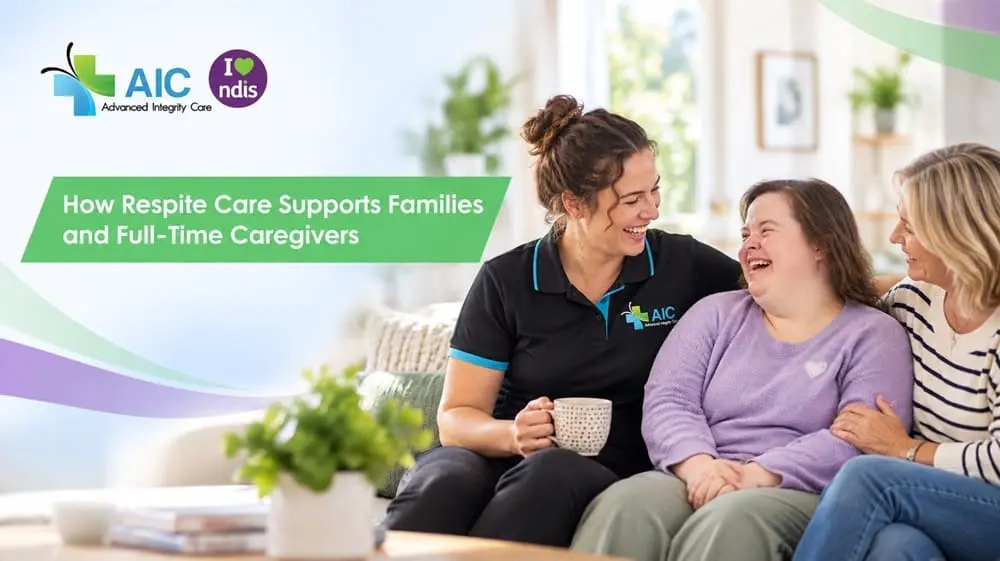
Support for a family member with disability, additional support needs or declining independence are so important. But while this level of care is what they provide every single day, that too requires time and energy and patience and emotional stamina. After several weeks and months, no matter how committed the caregiver is to their caregiving duties, it can become tiring or hard to maintain our own routines.
That is where respite care can practically help. Respite services provide an opportunity for a family caregiver to take time off, take care of other work and come back refreshed in the caring role rather than acting as replacements. In turn, help recipients receive safe support, an opportunity for social contact and a refreshing change in routine.
For families across NSW, respite care for people with disability can therefore support not only the individual but the wider household.
Respite care is temporary care and support when his or her regular caregiver needs a break or cannot provide their usual assistance.
Respite support can be a few hours, overnight or for an extended planned timeframe, depending on your particular needs. Services may also be delivered at the individual’s home, in the community or other appropriate care setting
Support can include:
Most importantly, good respite care should respect the person’s choices, preferences and usual way of living. Looking for a Community Access Service in NSW?
Many people who provide care for a family member are performing multiple roles at once. For instance, caring is sharing care with working people, people looking care of children, household management activities or to other relatives as well.
This makes it hard to carve out time for themselves.
Caregivers without proper breaks suffer continuous exhaustion, diminished focus and less time to socialize. And, more importantly, you not only skip personal appointments and exercise, but also keep putting aside simple day-to-day stuff.
Respite Care Provides Safe Breaks that Address Short-Lived Aspects of Life for Long-Term Family Caregivers.
It can be a trip to the doctor, visiting another family member, running errands or simply resting at home. Even just a touch of time away from caring duties allows for a more balanced rhythm throughout the week.
Respite support is sometimes viewed mainly as a service for caregivers. However, its benefits can extend much further.
| Area | Without Regular Respite | With Planned Respite Support |
| Caregiver wellbeing | Limited personal time and increased tiredness | More opportunities for rest and self-care |
| Family routine | Caring tasks may dominate the schedule | Greater flexibility for other responsibilities |
| Social life | Activities may become difficult to organise | More opportunity to maintain relationships |
| Person receiving care | Routine may depend heavily on one caregiver | Opportunity to interact with additional support workers |
| Long-term caring | Greater pressure on one family member | Caring responsibilities can become more sustainable |
Thus, planned respite support can assist families in achieving a more healthy balance between caring roles and more routine life.
Living with a full time carer can involve waking early, be disturbed sleep, appointments to attend, transportation requirement and endless household tasks and almost continual planning. Well, naturally this is a heavy workload with its own wear and tear.
But sometimes caregivers do not want to take a break because they fear for the wellbeing of the person in their care.
A professional respite care provider in NSW can ease this worry. Knowing that a family member has adequate support may give caregivers some peace of mind to take the much needed break.
Most importantly, respite does not have to start only when a caregiver is overwhelmed. By planning support in advance families are able to embed routines that are more sustainable. Looking for a Independent Living Service in NSW?
Respite may even be a great learning opportunity for the individual you are helping.
As an example, they may like to go out for coffee and/or be at the park or at a community event or an activity in which they get together with the support worker doing some favoured activity. Similarly, some may simply want in-home assistance while their primary caregiver takes a break.
This allows disability respite care to be a part of what they do to increase their interaction within the community and have more wider options in their schedule.
Alternative support workers may also help some participants find confidence in expressing needs and preferences to others beyond close relatives.
Family members almost always know a person and their routines better than anyone else can. However, sometimes depending on one caregiver may restrict chances to practice independence.
Providing the right support can allow respite to free up a person—to make choices for themselves in daily life.
For example, they may choose:
Therefore, person-centred respite care should focus on supporting choice rather than simply supervising the person while their caregiver is away.
Families may use respite for different reasons.
Planned respite allows families to organise support ahead of time. For example, a caregiver might schedule regular support every week or arrange respite before an important appointment, family event or short trip.
Because it is organised in advance, the provider can learn about routines, communication preferences and support requirements beforehand.
Sometimes a caregiver becomes sick or another unexpected situation occurs. Consequently, families may need alternative care quickly.
Availability will depend on the provider and the person’s individual support requirements. Therefore, families may find it useful to discuss contingency arrangements before an urgent situation occurs. Looking for a Nursing Services in NSW?
When one family member is doing most of the caregiving, the other relationships can be sometimes pushed to the side.
In a way, parents who look after a child with high support needs may rarely find time for their other children. A person who supports their partner may discover that they end up spending less and less time with friends.
Routine respite makes space for these connections.
This allows caregivers to engage in their partner, children, friends or extended family without simultaneously having to manage caring duties.
Related Services:
» SIL House Vacancy in Chisholm
» SIL House Vacancy in Maitland
» SIL House Vacancy in Lochinvar
» SIL House Vacancy in Rutherford
Every family has a different routine. Therefore, effective respite care should not follow a single fixed model.
Some caregivers need only a few hours of support, while others may require longer periods. Additionally, one person may enjoy community participation, whereas another feels most comfortable receiving care at home.
Before respite begins, families should discuss areas such as:
This information helps create individualised respite care that feels familiar and comfortable.
When choosing a service, families should look beyond availability. The right provider will spend time getting to know the person who is receiving care and their caregiver.
How are support workers matched, what is the system for recording particular routines, what communication families can expect and how changes to support are managed?
Caregivers should also be comfortable voicing concerns or asking for something different.
Open communication is the key to effective respite care, both among families and their support workers.
Related Articles:
» Why Respite Care matters for families and carers in NSW?
» Respite Care Supporting Families when they need it most?
» Respite care in Newcastle and How does it work?
» Respite Care options in Newcastle
» How Respite care Supports positive behaviour routines?
A break does not mean you escape responsibility. It allows many to remain caretakers for longer.
Since family caregivers also want and need rest, relationships, hobbies, appointments,and sometimes time for themselves.
Flexible respite care services in NSW allow family members time to rest while ensuring the loved one continues to receive appropriate dignified assistance.
It is only respite, of course, when both sides are better off: caregivers gain space that they vital need; the care receiver enjoys continued choice and dignity and stimulation as part of his and her daily activities.
Advanced Integrity Care acknowledges the Awabakal and Worimi Peoples as the Traditional Custodians of the land on which we work. We pay our respects to Elders past and present and extend that respect to all Aboriginal and Torres Strait Islander peoples.
admin@advancedintegritycare.com.au
Call: (02) 49511530
2/5 Withers St, West Wallsend NSW 2286, Australia
