
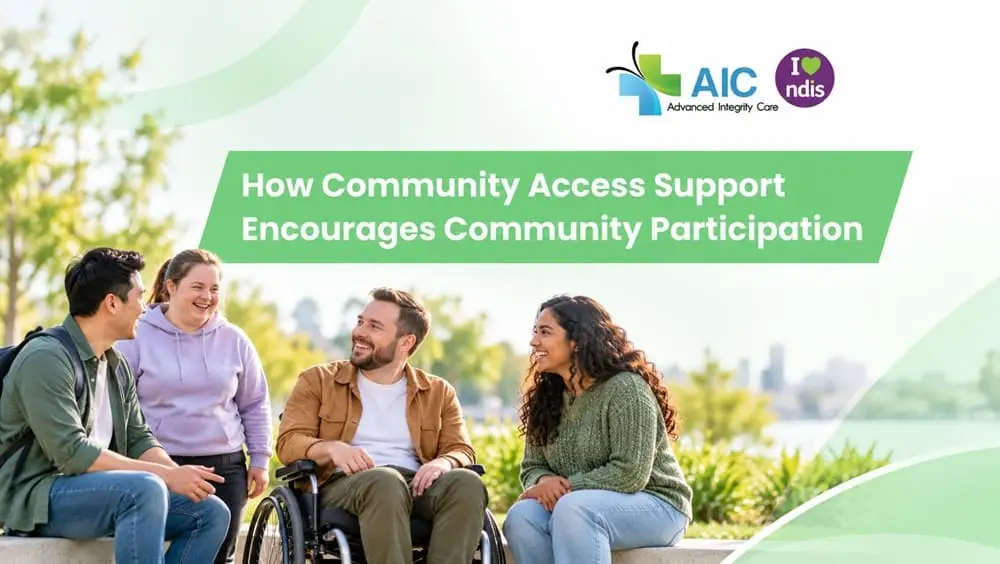
People with disabilities have the opportunity to participate in common daily activities like going to the local coffee shop, playing on a sports team and attending a local community event due to community access services. Some people who have physical, communication and/or self-esteem barriers will need appropriate types of support before they can be able to participate in these kinds of events.
That’s where personalised support makes a difference.
Community involvement may have different meanings for various types of individuals. To some individuals, community involvement would include leaving their home. Conversely, to some individuals, community involvement would involve spending time with their friends, making decisions regarding their activities, learning something new and participating in events with other people. AIC is one of several organizations throughout NSW which provides access to more inclusive opportunities for individuals to engage in community activities.
People are able to form bonds with other people through their shared interests, as well as live a more complete life when they have someone guiding them through the experience.
Community Access Support has created a customized individual support plan that allows individuals with disabilities to be able to participate in various types of community-based activities such as, social, recreational, educational, and everyday living within their respective communities.
Each person will require different levels of support. This type of support has no specific timeframe. For example, some people will choose to go grocery shopping on their own, while others might want to participate in an art class.
Community Access Programs provide a variety of types of assistance. These assistance can consist of enabling individuals to leave their home area; teaching individuals how to interact with other people (socialization); assisting individuals find the best method for transportation so they can participate in community based programs/activities; and supporting individuals during participation in community based activities.
The support worker may assist individuals with learning how to use public transit systems, interacting with others (strangers), and/or managing their daily routines/activities in a safe manner.
The objective of this project is not to provide all services to the participants. Rather, our intention is to assist them in making choices, and allow them to function more effectively in their daily routines. Get details on Community Access Services in NSW.
Everyone deserves opportunities to feel welcome, valued and connected.
There are various kinds of barriers that cause people with disabilities to find it hard to participate in activities within their communities. Some examples of such barriers are; having trouble getting into community buildings, not having enough transportation services available, finding it difficult to communicate, and being afraid of participating in unfamiliar settings.
Community engagement allows individuals to develop connections with people beyond their families and service providers.
When you regularly attend a gardening class and also participate with other readers at reading group meetings that are sponsored by your public library, you are creating a daily routine.
An example would be a person joining a book club run by their community library. At this time, he or she may find others in the same community who share his/her same interest. Attending gardening classes every week will help him/her establish a routine for attending the class.
As we go about our daily lives, we can feel like we are a part of our communities and societies.
Because of this, participants will have more choices than before as to what type of activity they want to engage in, how they want to participate in that activity and what choice would be best for them. Participants can also find out which activities they actually like doing.
Confidence often develops through small, repeated experiences.
The first step would be for a support worker to assist a person that has anxiety when placing an order for food at a coffee shop. Once the person has had the opportunity to practice ordering multiple times, they will eventually have the confidence to make their own order.
The slow, step-by-step approach used here promotes self-confidence and self-reliance, without putting too many demands on the user.
Support workers can assist their clients to acquire life skills that will be useful in everyday life. Some of these include: purchasing items; understanding how to find your way around; asking other individuals questions; and planning trips.
Importantly, each person will proceed at his/her own pace. For example, some people can learn how to go out by themselves; while others may participate in group discussions.
Both achievements matter. Looking for a Independent Living Service in NSW?
| Benefit | What it looks like in practice | Who it helps |
| Social connection | Attending clubs and neighbourhood gatherings | People experiencing social isolation |
| Greater confidence | Practising conversations and everyday decisions | People who find unfamiliar situations challenging |
| Practical independence | Shopping, budgeting and using transport | People developing daily living skills |
| Personal wellbeing | Enjoying recreation and meaningful activities | People seeking enjoyable routines |
| Skill development | Joining classes or volunteer activities | People exploring new interests |
| Community belonging | Building relationships outside the home | People wanting stronger social networks |
These benefits aren’t automatic. However, personalised activities, consistent encouragement and respect for individual preferences can help participants work towards meaningful goals.
Sometimes, wanting to participate isn’t enough. Practical barriers can make even a short outing challenging.
Reliable transportation makes a great deal of difference when it comes to being involved in the community locally.
A participant may be interested in attending a weekly community garden meeting, however, they may have difficulty using public transportation.
The support worker may provide assistance with planning an appropriate journey, practicing a familiar route and/or arranging for the required travel assistance, where appropriate.
As well as being able to find the right place to go out for a day, finding accessible venues will make sure you don’t run into any unnecessary problems when going out. Checking ahead of time about the entrance to the venue, if there are accessible toilets, what type of seating is provided, and what other facilities are available at the venue can prevent you from running into issues when you arrive.
Not everyone feels comfortable speaking with unfamiliar people.
Some participants might require more time to express themselves, whereas some other participants will find that they would rather have visual instructions, simpler instructions and/or a quiet environment.
A supportive approach allows people to participate at their own pace.
For example, going to a smaller craft group prior to attending a much larger community gathering will likely seem like an easier option.
Rather than forcing interaction, support workers may provide reassurance and respect the individual’s personal space, as well as encouraging the individual to participate at their own pace.
Daily activities provide excellent opportunities for establishing relationships and personal development.
Visiting a Local Library
A person that likes to read may be part of a weekly library book club. In addition to meeting people, they will have the opportunity to improve their communication skills and establish a consistent social routine.
Joining a Community Garden
The experience of gardening provides many practical learning opportunities through hands-on participation. In addition to gaining new knowledge and developing technical skills, gardeners also gain the benefits of working with other people. Gardening allows individuals to spend time outside where they have an opportunity to participate in physical activity.
A person who wants to be physically active could look into joining a swimming team or a sport group with no barriers to participation. They can find opportunities for physical activity that align with their personal interests and abilities, if provided the proper resources.
Other available community events include but are not limited to: Farmers’ Markets, Art Lessons, Community Celebrations, and Voluntarism opportunities that would be acceptable for you.
These are general examples, not individual AIC client case studies. Looking for a Respite Care Service in NSW?
The following comparison shows how suitable assistance may change someone’s experience. Individual outcomes will vary.
| Area | Without suitable support | With personalised support |
| Participation | Activities may feel difficult to access | Outings can become more manageable |
| Confidence | Unfamiliar situations may create hesitation | Guided practice may build confidence |
| Social connection | Opportunities to meet others may remain limited | Regular activities create opportunities for friendship |
| Independence | Some tasks may require family assistance | Individuals can practise making choices and completing tasks |
Participation in a community has benefits that extend outside of the person being supported.
Families can find comfort knowing their relative can participate in rewarding experiences with proper help.
Carers can have more free time to work, take care of themselves, or relax based on what they are going through at that point in life.
Local clubs and community groups also benefit when more people can participate.
An inclusive volunteer activity brings people together with varying levels of experience, skill and interest.
The use of disability support services with an emphasis on inclusion may help build stronger relationships across the larger community.
Related Services:
Choosing a provider involves more than comparing available activities.
The first thing to consider is how effectively the company listens to what the employee wants from their career, how they prefer to receive information, and what goals they want to achieve. However, there are many other factors that need to be taken into account when evaluating an employee’s performance.
Inquire about staff credentials, accessibility options offered, transportation services provided, and emergency procedures used by the company.
The proposed service will be assessed to determine if it aligns with the support options outlined in the individual’s plan.
The single greatest consideration when selecting an agency to work with, is that they recognize your right to make your own decisions and support self-reliance as opposed to excessive reliance on others.
Advanced Integrity Care (AIC) recognizes that community engagement is based on what is important to each person.
People who want to access supports in their community through the NSW Government can focus on what they are interested in, how they make decisions every day and what types of new things they could learn to help them in life.
The best way for an individual to start exploring a new interest, becoming more at ease in a group setting, or building better relationships with others, is by identifying what they would like to accomplish.
Related Articles:
» Benefits of Community Access Services for NDIS Participants in NSW
» Role of Community Participation in Improving Disability Wellbeing
» Why Community Access Support in NSW Is About More Than Going Out?
» Why Community Access Matters for Health, Confidence & Social Connection?
» How Community Access Services Support Independence Every Day?
Being part of a community makes each day more fun and worthwhile.
People with disabilities are able to apply the skills they possess while completing routine tasks such as grocery shopping or visiting friends. The purpose of Community Access Support is to help people with disabilities increase their level of independence by helping them develop the skills necessary to become more independent.
Advanced Integrity Care (AIC) to tell us about your goals, find out how we can support you to achieve them, and discover ways you could get involved more in your own local community.
Advanced Integrity Care acknowledges the Awabakal and Worimi Peoples as the Traditional Custodians of the land on which we work. We pay our respects to Elders past and present and extend that respect to all Aboriginal and Torres Strait Islander peoples.
admin@advancedintegritycare.com.au
Call: (02) 49511530
2/5 Withers St, West Wallsend NSW 2286, Australia
