Social relationships give us more pleasure and meaning every single day. As long as you have the ability to attend a community-based social event, meet new friends and/or learn something new, you will most likely believe you are a valuable member of your community. Unfortunately, there are many individuals living with disabilities that do not have the same opportunity to get involved in their community.
The value of community access programs lies in providing individuals with disabilities the opportunity to attend social functions, build friendships and develop essential life skills.
As well as this, through individualized NDIS Community Involvement Support individuals can find out about things they enjoy doing, improve on their communication skills with other people and gain confidence in everyday situations.
Services like Advanced Integrity Care – NSW can assist individuals in finding ways to become more socially included, independent, and develop themselves personally.
Access programs provide a way for people with disabilities to participate in recreational, educational, cultural and social activities in the area where they live.
This type of service will enable you to continue with your daily routines, and at the same time, it can give you opportunities to try things that you haven’t tried before, and develop friendships that last.
Participants had the option to join a cooking class at a community center, attend an event in their town/city, participate in recreational activities, etc.
As well as support staff to help participants communicate, plan trips, and learn how to find their way around unfamiliar areas.
The primary purpose of this project is to create opportunities for people with disabilities to participate in their respective communities and to provide support to help them identify and pursue their own personal needs, desires, and objectives. Get details on Community Access Services in NSW.
Social skill development takes time, patience and chances to engage in activities with other people. Community involvement offers a simple way to practice developing those skills.
Friends are able to establish and maintain strong relationships when they communicate effectively.
Individuals are able to introduce themselves to other people by engaging in social/community activities, they can also ask questions, state what they believe and listen to other individuals.
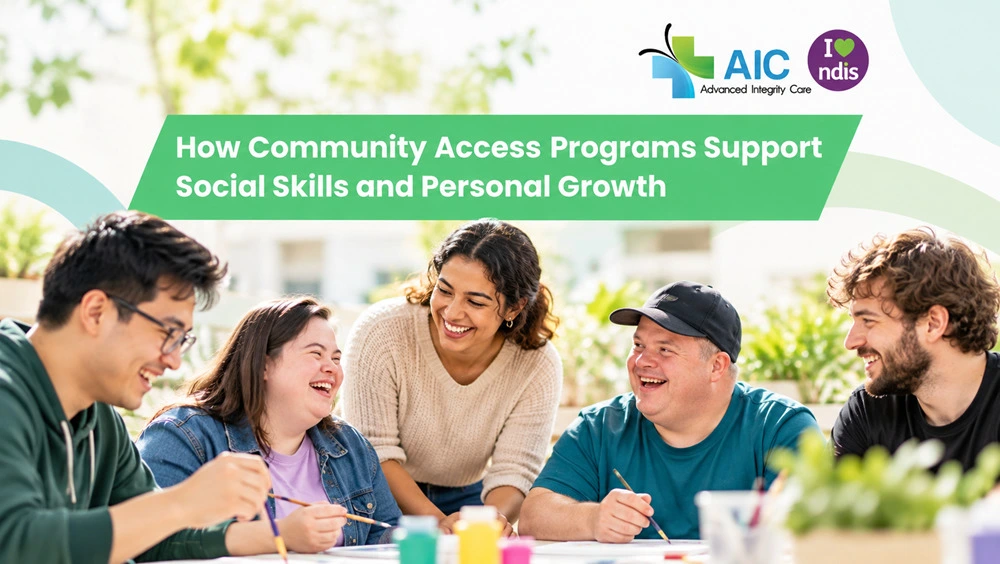
Taking an art course locally will allow you to communicate with the instructor as well as the other students.
A continuous stream of communication can help develop your spoken and nonspoken forms of communicating as you continue to interact.
Many people find themselves uncomfortable when in social situations where they don’t know many of the participants, or in environments with which they are unfamiliar.
Participation in positive community activities can help alleviate anxiety about things you have no control over, and assist in building confidence.
Support staff can help and inspire participants to decide on which activity they want to participate in.
As you do things more often, they may start to feel easier and more fun.
As a result of this program, people will be able to have more positive social interactions and gain more self-confidence when interacting with others.
Overall emotional health as well as feeling connected to other people is also influenced by friendship.
Access services for people who are disabled can assist in bringing together individuals that share common interests by providing them with opportunities to attend events together.
No matter what a person likes to do (gardening, listening to music, swimming, volunteering etc.), there are several ways for them to join in a group activity and form stronger relationships with other people.
When you engage in continuous communication with others, you will find that your relationships grow organically and do not depend on infrequent social encounters.
Events in the community usually involve groups of individuals coming together to achieve a common goal.
For example, participants in a cooking class can assign roles, express how they feel about preparing meals, and then complete all of the assigned tasks by working together.
Thus they may be able to work together, practice patience, solve problems and see things from the other person’s point of view.
These kinds of opportunities offer many advantages for people because they allow people to learn how to do things in “real life” (i.e., outside of a classroom) which can help them in their job, in school and in everyday interactions with other people. Looking for a Respite Care Service in NSW?
Community access activities help participants build basic life skills such as grocery shopping, eating out in restaurants, riding public transit, and making simple money purchases.
While shopping, you will have help to compare prices at different stores, communicate with store employees, and stick to your budget.
Slowly, but surely, individuals will be able to do what they need to do every day and make decisions for themselves.
Everyone deserves opportunities to explore activities they genuinely enjoy.
Participants will have an opportunity to discover additional areas of interest through the community-based program.
Many people will find that they have a passion for photography, gardening, dancing, or creative writing.
When developing a new skill it is likely that you will experience a sense of accomplishment which could inspire you to continue on your journey toward achieving your other objectives.
Feeling connected to others can positively influence emotional wellbeing.
Socializing with others regularly offers an opportunity to have fun, make friends and express oneself.
Additionally, engaging in purposeful activities can be beneficial for reducing isolation among many people.
While participating in your community will not take the place of professional mental health care, it can lead to a more connected and meaningful life.
Personal growth often begins with having greater control over everyday choices.
Community-based programming creates opportunities for individuals participating in the program to choose their own activities, make plans for trips/outings, and share what they would like to do.
For example, someone might choose to join a particular recreational group or try something different in terms of recreational activities.
As a result, participants may improve their ability to make decisions with greater control over what happens. Get details on Wound Care Service in NSW.
Selecting the most appropriate activities will depend upon each person’s interests, ability and support needs.
| Community activity | Social skills supported | Personal growth opportunities |
| Group cooking classes | Communication and teamwork | Meal preparation and confidence |
| Arts and craft workshops | Sharing ideas and social interaction | Creativity and self-expression |
| Community gardening | Cooperation and relationship building | Responsibility and practical skills |
| Recreational sports | Teamwork and positive interaction | Physical activity and confidence |
| Shopping and café visits | Conversation and social etiquette | Budgeting and independence |
| Community volunteering | Collaboration and relationship building | Purpose and responsibility |
These are illustrative examples. Individual outcomes depend on personal goals, accessibility and the support available.
The National Disability Insurance Scheme (NDIS) can provide funding for supports related to disabilities which will enable eligible participants to participate in both social and leisure activities.
This can take the form of help from a support worker so that a participant can get extra help to participate in community activities.
However, NDIS funding will depend upon the participant’s specific plan, disability-related needs and the relevant funding criteria. Costs associated with general participation in activities (e.g. standard entry fees/memberships) are typically the responsibility of the participant.
In addition to the above, the NDIS recognizes the value of developing self-esteem, social abilities, and network through appropriate community involvement services.
Participants will need to look over what they have planned and talk about how best to get help from their NDIS contact or support coordinator.
Related Services:
» Independent Living Service in NSW
Selecting an appropriate program is more than just choosing something off a schedule.
To begin, you should take into account the participant’s interests, their preferred method of communication and what they hope to achieve through personal growth.
In addition, find out if the program provides accessible environments, appropriate support arrangements, and flexible participation options.
Also, find out how support workers promote independence in addition to respecting the choices made by each person.
A quality Community Access Program in New South Wales needs to prioritize respect, safety, inclusivity and the opportunity for individuals to participate in a manner that is relevant to their lives.
The most important thing is that the participants will feel like they can express their preference as to how much or how little time they want to be involved.
Related Articles:
» Role of Community Participation in Improving Disability Wellbeing
» Benefits of Community Access Services for NDIS Participants in NSW
» Why Community Access Support in NSW Is About More Than Going Out?
» Why Community Access Matters for Health, Confidence & Social Connection?
» Community Access Support: What’s Included and How It Helps
Advanced Integrity Care – NSW recognizes that individuals want to be involved in their community, and that they also have the right to choose how they participate.
People who want to explore what community access support is available to them in NSW will be able to talk about what they would like to do, how much they want to participate, and what type of support they think could assist them in being able to confidently participate in everyday activities.
A person centered approach will assist you in identifying opportunities that may improve your communication skills, help develop new friendships, and/or increase your level of independence.
The ultimate goal of community participation is to allow people to participate in ways that are personally meaningful to them, as opposed to participating in a prescribed or standardized manner.
Community access programs offer a great deal of benefits besides providing individuals with an opportunity to leave their homes and participate in various community events. These programs also offer hands-on experience, which will assist in improving communication skills, developing relationships among participants, and supporting personal growth.
Regularly taking part will also assist people in becoming more confident, independent, and in having a greater bond with those around them.
People with disabilities can find enjoyment from exploring new hobbies, making significant decisions and participating in activities that enhance the overall quality of their lives.
For those who are considering NDIS community participation programs in New South Wales (NSW), Advanced Integrity Care – NSW can be used as a reference when discussing community participation goals and suitable support.
Advanced Integrity Care acknowledges the Awabakal and Worimi Peoples as the Traditional Custodians of the land on which we work. We pay our respects to Elders past and present and extend that respect to all Aboriginal and Torres Strait Islander peoples.
admin@advancedintegritycare.com.au
Call: (02) 49511530
2/5 Withers St, West Wallsend NSW 2286, Australia
